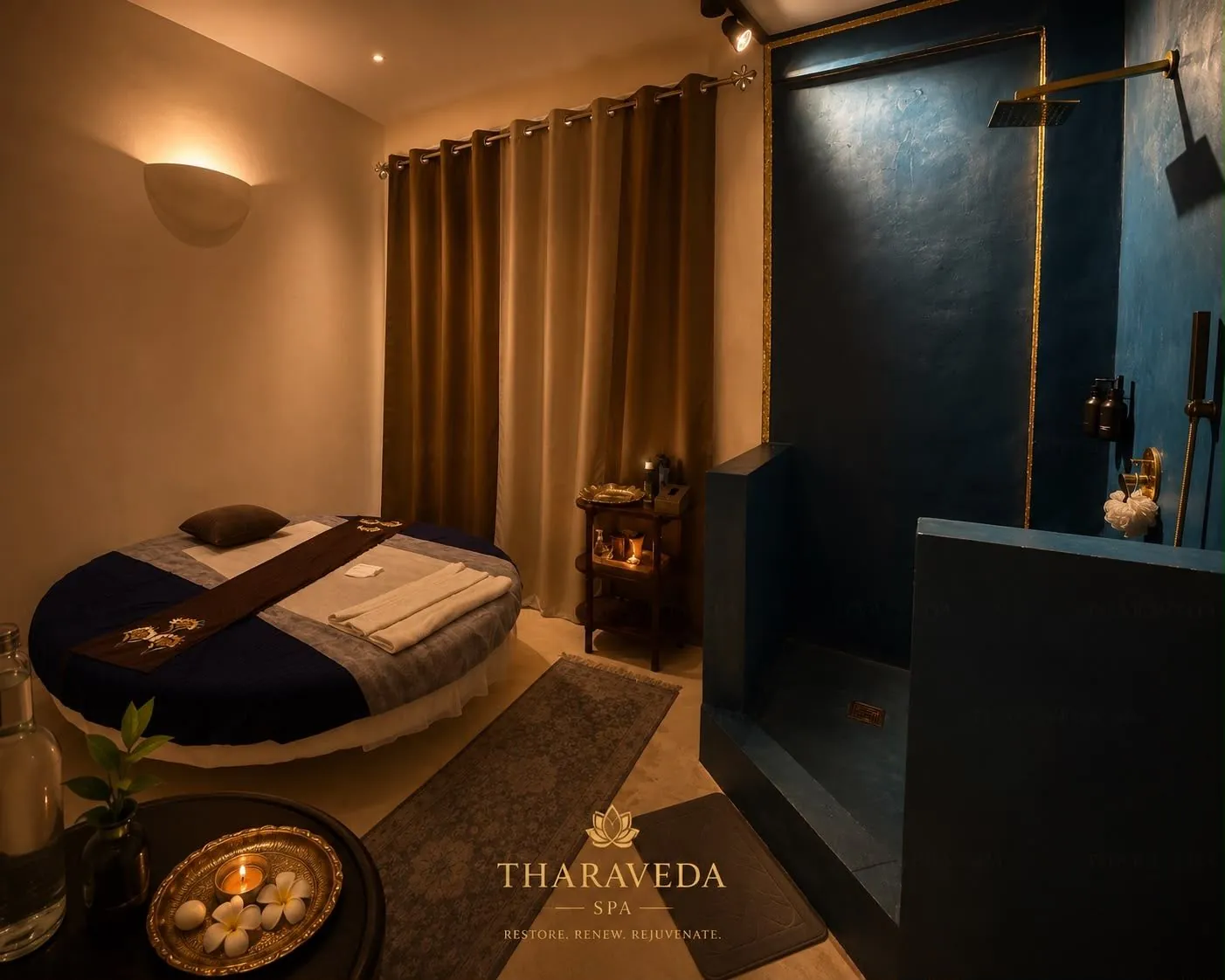

If you search for a spa in Gurgaon, you will get a wall of near-identical results: warm lighting, folded towels, petals arranged on a bed. Every listing looks the same because every listing is photographed the same way. The differences that actually matter to your experience — how therapists are trained, how rooms are cleaned between guests, whether the pressure will be right for you — never appear in a photograph.
So here is what to look at instead. This is the checklist we would use ourselves, and it applies whether you end up booking with us or with someone else entirely.
1. Check whether the therapists are trained, and in what
"Trained therapists" is on every spa's website. The useful follow-up is: trained in what tradition, and for how long?
Ayurvedic bodywork, Thai massage, Balinese technique and Swedish massage are genuinely different disciplines with different training paths. A therapist who has trained properly in one of them will be able to tell you what their therapy does and does not do. A therapist who has been shown a routine over a weekend will give you a pleasant hour of generic rubbing — which is fine if that is all you wanted, but it is not what you are paying premium prices for.
When you call to book, ask which tradition the therapist trained in and whether they can adjust the session for a specific problem, like a stiff neck or a lower back that flares up after long drives. The quality of the answer tells you a great deal.
2. Ask what happens in the room between two guests
This is the single most revealing question you can ask, and almost nobody asks it.
A properly run spa will have a clear answer: fresh linen for every guest, disposable underwear provided unopened, towels laundered off-site or on a commercial cycle, the therapy bed wiped down, the room aired, and bathrooms cleaned between sessions rather than at the end of the day. If the person on the phone has to improvise an answer, that tells you the protocol does not exist.
You can also check this yourself on arrival. Look at whether the linen is being brought in fresh in front of you, whether the oils are decanted into clean bottles, and whether the bathroom floor is dry.
3. Look at the rooms, not the reception
Reception areas are designed to be photographed. Therapy rooms are where you will actually spend ninety minutes.
The things worth checking: is the room genuinely private, with a door that closes and locks rather than a curtain? Is there an attached shower, or will you be walking down a corridor in a robe afterwards? Is there any sound bleed from the corridor, the mall, or the next room? Is the temperature controllable — because a cold room ruins an oil massage, and an overheated one makes you restless.
At our Plaza Mall spa in Sector 28, every room is en-suite, and several include a private steam and rain shower. At Golf Course Road in Sector 56, the four suites each have their own character — a hamam room with a heated stone slab, a couples suite with twin beds, a jacuzzi suite. You should be able to ask to see a room before you commit, and a good spa will show you one.
4. Treat the pricing as information
Very cheap is a signal, and so is very expensive.
A sixty-minute massage has real costs behind it: a trained therapist's time, laundry, oils, rent on a private room, and the fact that the room cannot be used by anyone else during that hour. When a price sits far below what those costs allow, something is being cut — usually therapist pay, which means turnover, which means inconsistent sessions.
Equally, a very high price does not guarantee skill. It often buys marble and a longer robe. What you want is the middle: a price that reflects a real room and a real therapist, with no pressure to upgrade once you are lying down.
Which brings us to the most common complaint about spas in Gurgaon.
5. Find out whether they upsell mid-session
You have booked a sixty-minute massage. Twenty minutes in, you are told that for an additional amount they can add a scrub, or extend the session, or switch to a "premium" oil. It is an uncomfortable negotiation to have while lying face down and half-asleep, and that is precisely why some places do it.
Ask directly when booking: is the price you quote the final price, and will anything be offered to me during the session? A spa that says "no, the price is the price" and means it is worth returning to.
6. Read the reviews for patterns, not scores
An overall rating of 4.6 versus 4.4 means almost nothing. What matters is the shape of the reviews underneath.
Look for specifics: do reviewers name therapists? Do they describe the actual therapy, or just say "nice ambience"? Are the negative reviews about one bad day, or do three different people over six months mention the same problem — rushed sessions, surprise charges, unclean bathrooms? A repeated complaint is a policy. A one-off complaint is a bad day.
Be sceptical of a wall of five-star reviews all posted in the same week with no detail. That pattern is bought, and it is common.
7. Make sure they ask you something before they start
This is the quiet marker of a professional spa. Before a session, you should be asked a few things: are you pregnant, do you have any injuries or recent surgery, do you have high or low blood pressure, any skin conditions or allergies to nut-based oils, and how much pressure you like.
These are not formalities. Deep tissue work is unsuitable in several of those situations, certain oils are genuinely unsafe for people with nut allergies, and heat therapies like a hamam or a jacuzzi are not right for everyone. If nobody asks, nobody is thinking about it.
A short list you can use on the phone
- Which tradition are your therapists trained in?
- What is changed in the room between two guests?
- Is the room private and en-suite?
- Is the quoted price final, with nothing offered during the session?
- Can I request a specific pressure, and tell the therapist mid-session if it is wrong?
- Do you ask about health conditions before the therapy?
Six questions, about four minutes on a call. It is a better filter than an hour of scrolling through photographs.
And one thing to decide before you call
Know why you are going. A spa visit to switch off from a stressful month and a spa visit to fix a shoulder that has hurt since March are two different bookings, and they call for different therapies and different lengths.
If you are not sure which you need, our guide to choosing between Balinese, Thai and Swedish massage compares them side by side. If you have never been to a spa at all, what to expect on a first visit covers the practical side — what to wear, what to say, and what happens when.