
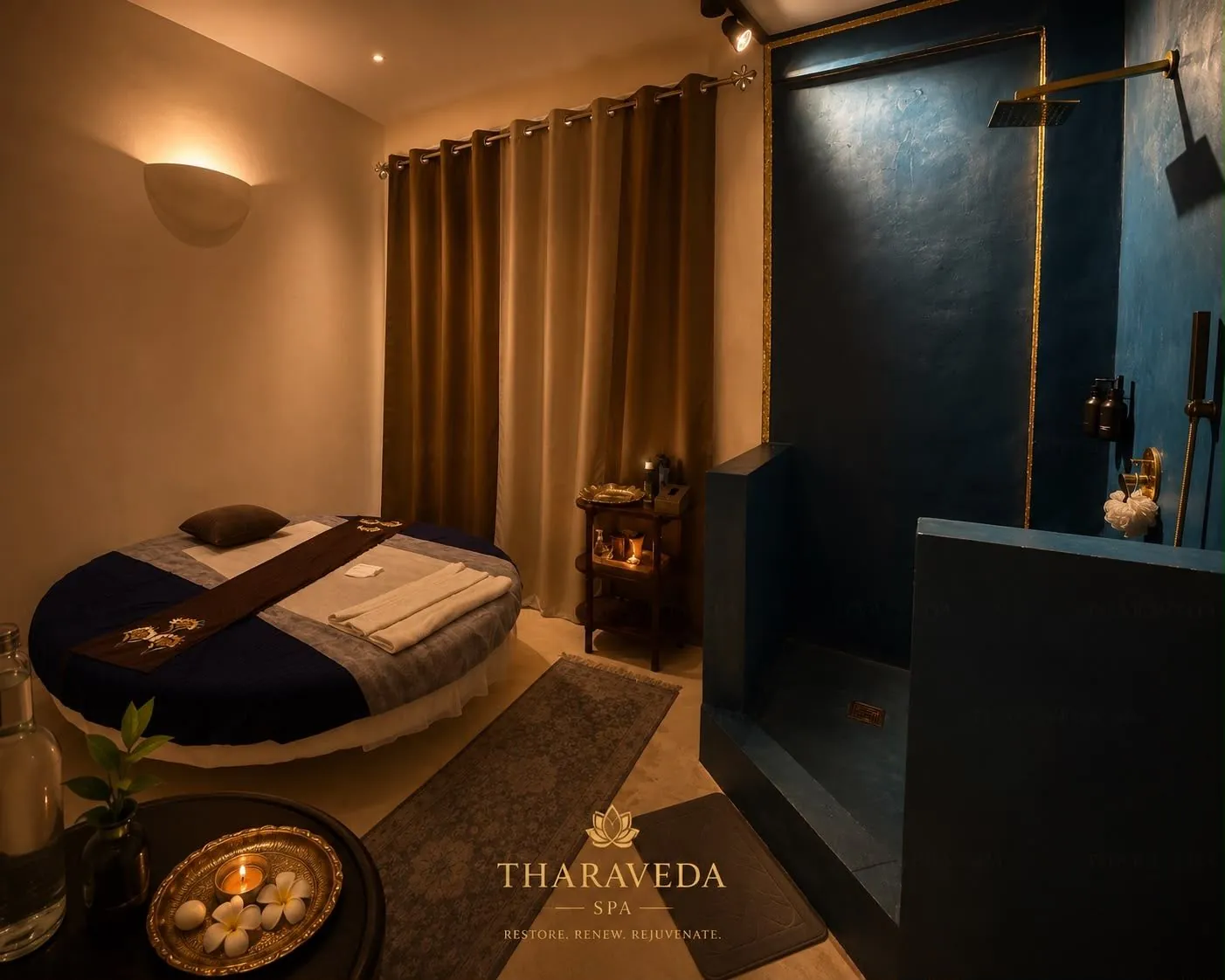
Abhyanga is a full-body massage with warm oil, performed with long, rhythmic strokes that follow the direction of the limbs rather than working against the muscle. In Ayurvedic practice it is considered a daily self-care routine, not an occasional luxury — snehana, which translates roughly as oleation, or the act of making something soft and well-oiled.
That is the first thing worth understanding. Abhyanga is not designed to dig into a knot. If you came in with a specific injury or a tight band across your shoulder blade, a deep tissue session is the better booking. Abhyanga is designed to settle the nervous system and nourish the skin and tissue, and its effects are cumulative rather than instant.
What actually happens in a session
A standard Abhyanga runs sixty to ninety minutes. Here is the sequence, roughly.
Consultation. A short conversation about how you have been sleeping, how your digestion has been, whether you run hot or cold, and any health conditions. In traditional practice this is about identifying your dosha — the Ayurvedic constitutional type — which determines the oil used. In practice, what it does is let the therapist choose between a heavier sesame-based oil and a lighter coconut or sunflower blend, and set the pressure.
Warming the oil. The oil is heated to roughly body temperature or a little above. This is not decoration. Warm oil spreads over skin differently, absorbs faster, and the heat itself does a lot of the relaxing before any pressure is applied.
The massage. Long strokes along the long bones, circular strokes around the joints. The therapist works down from the scalp and face, through the arms and torso, to the legs and feet. The pressure is light to medium and consistent — you should not be bracing against it at any point.
Rest. Good Abhyanga ends with the oil left on the skin for ten to fifteen minutes before you shower. This is the part most people cut short, and it is the part that does a lot of the work.
The shower. Warm water, minimal soap. The goal is to take off the excess, not to strip the skin back to dry.
What it is good for
Three things, honestly stated.
Stress and the nervous system. This is the strongest effect and the one people notice first. Slow, predictable, rhythmic touch over a long period reliably shifts people out of a state of alertness. Most guests describe feeling heavy and slightly spacey afterwards — that is the point, and it is also why we suggest not scheduling anything demanding immediately after.
Sleep. Related to the above, and the benefit people report most consistently in the days following a session. If you are going mainly for sleep, book in the evening and go home afterwards rather than back to work.
Skin and dryness. The least glamorous and most reliable effect. Delhi NCR winters are hard on skin, and an hour of warm oil does more than a week of lotion. If you live with persistently dry skin, this alone can justify a monthly session.
What it is not for
It is worth being clear, because Ayurvedic marketing can get expansive.
Abhyanga is not a treatment for a medical condition. It will not cure an illness, reverse a diagnosis, or substitute for medical care. It is unlikely to resolve a structural problem like a disc issue or a frozen shoulder, and the honest answer when someone arrives with one of those is that they need a physiotherapist or a doctor first, and massage as a complement afterwards.
It is also not the right therapy if what you want is deep pressure. People sometimes book Abhyanga expecting intensity and leave disappointed. The pressure is deliberately moderate.
Who should avoid it, or check first
- During illness with fever — traditional practice avoids Abhyanga while a fever is present, and that is sensible advice generally.
- Pregnancy — possible with a trained prenatal therapist and modified positioning, but not with a standard Abhyanga routine. Always say if you are pregnant or trying to be.
- Recent surgery, fractures or open skin — wait, and ask your doctor.
- Nut or seed allergies — many Ayurvedic oils are sesame-based. Say so when booking and a different base can be used.
- Skin conditions in an active flare — oil and friction can aggravate eczema or psoriasis during a flare.
If you have a heart condition, uncontrolled blood pressure, diabetes with neuropathy, or you are on blood thinners, mention it. None of these automatically rules out a session — they change how it is done.
How to get more out of it
Do not eat a heavy meal in the two hours before. Lying face down on a full stomach is unpleasant and Ayurvedic practice advises against it for its own reasons.
Arrive early enough to stop moving. Ten minutes of sitting still before a session makes a noticeable difference to the first twenty minutes of it.
Say what you want. Lighter, firmer, more time on the shoulders, skip the face, leave the scalp out because you have somewhere to be. A therapist cannot read your mind and most guests say nothing at all.
Drink water afterwards, and do not rush. The twenty minutes after a session are part of the session.
How often
In traditional practice, daily — as self-massage at home, which is a genuinely good habit and costs nothing but a bottle of sesame oil and ten minutes.
As a spa therapy, once a month is a reasonable rhythm for general wellbeing, and fortnightly during a stressful stretch or a hard winter. We go into this in more detail in how often you should actually get a massage.
If stress and sleep are your main reasons for coming, it is also worth reading about Shirodhara, which is often done immediately after an Abhyanga and targets the same thing from a different direction.
We offer Abhyanga at both outlets — Golf Course Road, Sector 56 and Plaza Mall, Sector 28.


