
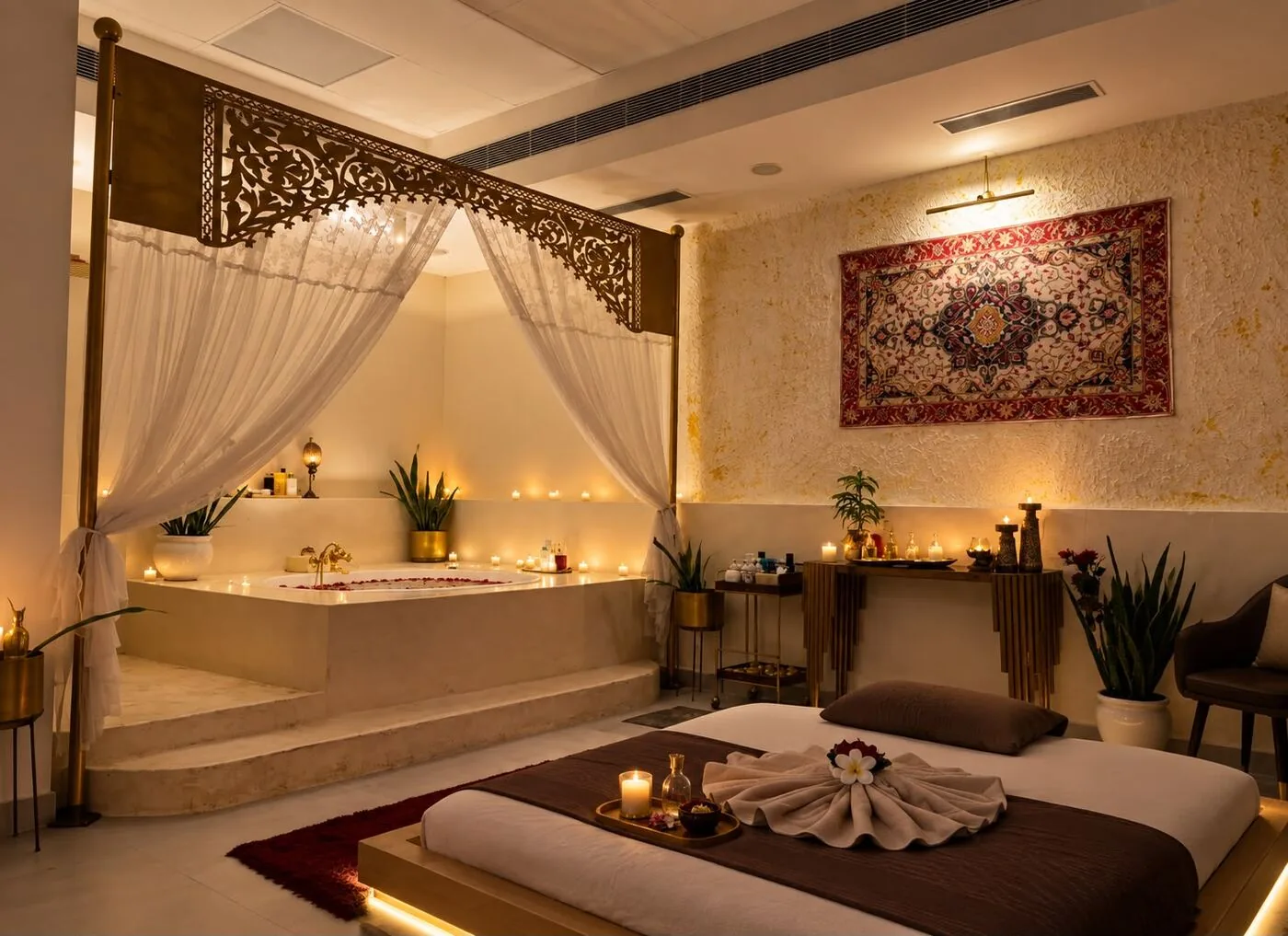
An aromatherapy massage is a gentle oil massage, usually Swedish in technique, in which essential oils are blended into the carrier oil and chosen for a particular effect — sleep, anxiety, low energy, muscular soreness.
It occupies an odd position. People either dismiss it as a scented upsell or believe it cures things it does not. The truth sits in between, and it is worth laying out properly.
Why scent affects mood so quickly
Every other sense you have — sight, sound, touch, taste — routes through the thalamus before it reaches the parts of the brain that handle emotion and memory. Smell does not. Olfactory signals travel from the nose to the olfactory bulb and then almost directly into the amygdala and hippocampus, the structures most involved in emotional response and memory formation.
That is why a scent can return you to a childhood kitchen faster and more completely than a photograph. It is also why the mood effect of essential oils is immediate rather than gradual — you are not waiting for anything to be absorbed or metabolised.
Two mechanisms are usually proposed for aromatherapy: inhalation acting on this olfactory-limbic pathway, and absorption of active compounds through the skin. The evidence for the first is much better than the evidence for the second. In practice, what you are smelling for sixty minutes probably matters more than what is on your skin.
What the evidence actually supports
This is a field with a lot of enthusiastic claims and a modest amount of good research, so it is worth being precise.
Reasonably supported: short-term reductions in anxiety and improvements in subjective sleep quality, particularly with lavender. There is a reasonable body of small trials, including in clinical settings such as pre-operative anxiety and intensive care, pointing the same direction. The effect sizes are modest and the studies are mostly small.
Plausible but thinner: effects on mood, perceived pain and nausea.
Not supported: treating infections, curing or managing diseases, "detoxifying" anything, balancing hormones, or substituting for medical care. Essential oils are not medicine, and nobody should be using them in place of treatment for a diagnosed condition.
The sensible summary: aromatherapy massage is a genuinely effective relaxation therapy with a real and measurable effect on how you feel, and it is not a treatment.
Choosing an oil, by what you actually need
Anxious, wound up, sleeping badly — lavender. The best-studied of all essential oils for exactly this, and the reason it is in almost every night-time blend. Often paired with chamomile.
Low, flat, no energy — citrus. Bergamot, sweet orange, grapefruit. Bright, lifting, and useful for a late-afternoon session when you still have an evening ahead. Note that bergamot in particular can increase skin sensitivity to sunlight, so it belongs in an evening session rather than before a day outdoors.
Mentally foggy, need to concentrate — peppermint or rosemary. Stimulating rather than calming, and an unusual choice for a massage, but suited to a shorter head-and-shoulder session in the middle of a working day.
Sore muscles — ginger, black pepper, or eucalyptus. Warming oils that pair well with firmer work. If your issue is genuinely muscular rather than mood, read the comparison of massage styles first; aromatherapy is a light-pressure therapy and may not be the right booking.
Congested, run-down — eucalyptus. Avoid during an active fever, as with any massage.
Grounding, heavy, unfocused — sandalwood, vetiver, frankincense. Warm, woody, and the blends people most often ask to take home.
Safety, which is genuinely worth reading
Essential oils are concentrated plant extracts, not decoration, and a few things matter.
- They must be diluted. Undiluted essential oil on skin can cause burns and sensitisation. In a professional massage they are blended into a carrier oil at a low concentration — usually one to three per cent.
- Tell the spa about allergies, especially to nuts and seeds. Carrier oils are frequently almond, sesame or coconut based.
- Pregnancy. Several oils are not advised in pregnancy, particularly in the first trimester — clary sage, rosemary, juniper and others. Always say if you are pregnant or trying to be, and expect a properly trained therapist to change the blend.
- Epilepsy. Rosemary and a few other oils are generally avoided. Mention it.
- Asthma. Strong scent can trigger symptoms in some people. Ask for a very light blend, or skip aromatherapy and take a plain oil massage.
- Photosensitivity. Citrus oils, bergamot especially, can make skin more reactive to sunlight for several hours.
- Children and babies. Dosing differs substantially. This is not something to improvise at home.
- Never swallow them. Internal use of essential oils is not safe without qualified supervision, whatever you have read online.
A good spa will ask you about most of this before blending anything. If nobody asks, that is a signal.
Getting more out of the session
Say what you want to feel, not which oil you want. "I want to sleep tonight" or "I have an event later and need to not be a zombie" gives a trained therapist much more to work with than naming an oil you read about.
Smell the blend before it goes on. Ask. If you dislike a scent, the entire mechanism works against you — you cannot relax into a smell you find unpleasant for an hour.
Keep the pressure light. Aromatherapy is a light-to-moderate therapy by design. If you want firm work, book a deep tissue session and ask for a calming oil to be used in it.
Do not shower immediately, if you can manage it. Giving it half an hour extends the effect.
Book it for the evening if the aim is sleep, and go home afterwards rather than back out.
Where to book
Aromatherapy massage is on the menu at our Plaza Mall spa in Sector 28, and we blend to what you tell us you need rather than to a fixed list. If what you are really after is deep calm rather than scent specifically, Shirodhara at our Sector 56 outlet is the stronger therapy for an overactive mind.


